
Bockman’s Auto, Truck & Tire provides belt and hose inspection and replacement at two locations in DeKalb County, Illinois: 2158 Oakland Dr in Sycamore and 112 Industrial Dr in DeKalb. Services include serpentine belt replacement, timing belt service, radiator hose replacement, and full cooling system hose inspection. As a NAPA Auto Care center, NAPA Shop of the Year, and 17-time Best Auto Repair winner in the Daily Chronicle Readers’ Choice, Bockman’s has been keeping DeKalb County drivers moving since 1964. All qualifying belt and hose replacements are backed by the NAPA Peace of Mind Warranty: 3 years or 36,000 miles, honored at over 18,000 NAPA Auto Care locations nationwide.
Call either location or book online. Belts and hoses don’t give much warning before they fail, and catching them early is almost always less expensive than the alternative. We’ll take a look, tell you what we see, and give you a straight answer.
Or book online anytime at Bockmans.com
Most vehicle breakdowns that leave people stranded are preventable. Belts and hoses are near the top of that list. They’re rubber components that degrade over time, cracking and softening until they fail. When they go, they usually go without much warning.
A snapped serpentine belt kills your charging system, power steering, and cooling pump all at once. A blown radiator hose can turn an ordinary drive into a tow and an overheating engine into a much bigger repair bill.
The good news: belts and hoses are inexpensive to inspect and relatively inexpensive to replace before they fail. We check them as part of our Digital Vehicle Inspection on every vehicle that comes in. We’ll tell you honestly what we see and when replacement makes sense.
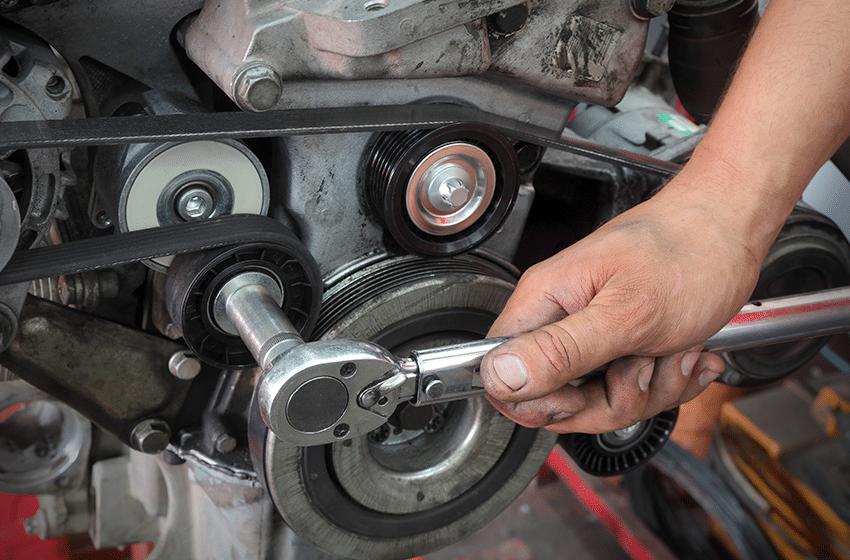
The serpentine belt drives most of your engine’s accessory systems: the alternator, power steering pump, air conditioning compressor, and water pump on most vehicles. On older vehicles, several separate V-belts handled that work. Modern vehicles typically use one serpentine belt routed through multiple pulleys.
A worn serpentine belt may squeal, especially on cold starts or when the AC kicks on. Cracking, fraying, or a glazed surface are signs it’s getting close to the end of its service life. When it breaks, everything it drives stops working at the same time.
We check for cracking, fraying, glazing, and proper tension at every service visit.
When the belt shows wear or approaches the manufacturer’s recommended replacement interval, we replace it and inspect the tensioner and idler pulleys at the same time.
A tensioner that’s losing tension or a seized idler pulley will wear a belt prematurely and can cause it to slip or come off. We inspect both whenever the belt is out.
Not every vehicle has a timing belt. Many use a timing chain instead. But for vehicles that do have one, the timing belt is one of the most critical maintenance items on the engine. It keeps the camshaft and crankshaft in precise sync. When it fails, and it typically fails without warning, the result on an interference engine is bent valves and serious internal engine damage.
Timing belt replacement intervals vary by manufacturer but generally fall in the 60,000 to 105,000-mile range. If you’re not sure whether your vehicle has a timing belt or when it was last replaced, that’s worth knowing before you hit the interval.
We replace timing belts at or before the manufacturer-recommended interval. We typically recommend replacing the water pump, tensioner, and idler pulleys at the same time. They’re accessed during the same job, and doing it in one visit saves significant labor compared to coming back for them later.
Your cooling system uses rubber hoses to move coolant between the engine, radiator, heater core, and overflow reservoir. These hoses handle significant temperature swings, hot coolant under pressure in summer and near-freezing conditions in winter, and they degrade from the inside out. A hose can look fine on the outside and be soft, swollen, or brittle internally.
These carry coolant between the engine and radiator. A failed radiator hose causes an immediate loss of coolant, rapid overheating, and a vehicle that cannot be driven. We squeeze-test hoses during inspection. If a hose feels soft or spongy or doesn’t spring back, it’s due for replacement.
These carry coolant to and from the heater core. A leaking heater hose causes coolant loss and loss of cabin heat. If one fails inside the cabin, it creates a significant mess.
Smaller hoses in the cooling circuit that are easy to overlook but subject to the same wear. We inspect them as part of a full cooling system check.
High-pressure and low-pressure hoses carry power steering fluid between the pump and rack. A leaking hose causes fluid loss, changes in steering feel, and pump wear. We inspect for seeping fittings and cracking.
Smaller rubber hoses throughout the engine bay that carry vacuum to sensors, actuators, and the brake booster. Cracked or collapsed vacuum hoses cause drivability problems that can be tricky to track down: rough idle, hesitation, or check engine lights with vacuum-related codes.
Rubber fuel line sections are less common on modern vehicles but present on older ones. A cracked fuel line is a safety concern. We flag these immediately.
Rubber degrades faster with extreme temperature cycling. DeKalb County delivers that in abundance. Hot summers stress hoses under pressure. Hard winters make rubber brittle and cause cracks to develop. The freeze-thaw cycle that tears up Illinois roads does something similar to rubber components that spend years cycling between cold soaks and operating temperature.
If you bought a vehicle that spent its life in a warmer climate and moved it to Illinois, the hoses and belts may be further along than the mileage alone suggests. We check condition, not just age and mileage.
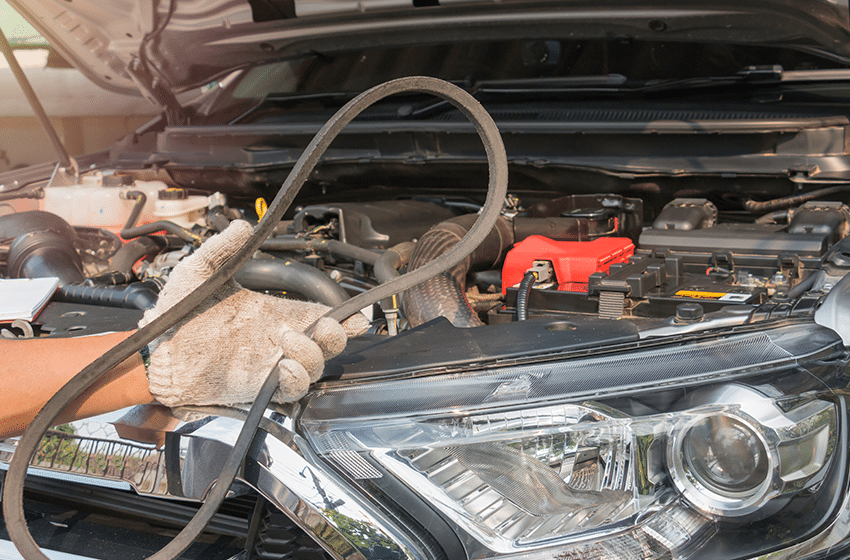
Worn or marginal belts and hoses are among the most common items flagged during a Digital Vehicle Inspection at Bockman’s. When a technician spots a hose that’s starting to look questionable or a belt with surface cracking, you’ll see it in your inspection report with photos. We’ll tell you what we found, where it is in its service life, and what we recommend. Then the decision is yours.
We don’t push belt and hose work that isn’t needed. But we won’t stay quiet about something heading toward a problem either. That’s the whole point of the inspection.
Qualifying belt and hose replacements at Bockman’s are covered by the NAPA Peace of Mind Warranty: 3 years or 36,000 miles, honored at over 18,000 NAPA Auto Care locations nationwide.
Bockman’s Auto, Truck & Tire provides belt and hose inspection and replacement at two locations in DeKalb County, Illinois: 2158 Oakland Dr in Sycamore and 112 Industrial Dr in DeKalb. Services include serpentine belt replacement, timing belt service, radiator hose replacement, and full cooling system hose inspection. As a NAPA Auto Care center, NAPA Shop of the Year, and 15-time Best Auto Repair winner in the Daily Chronicle Readers’ Choice, Bockman’s has been keeping DeKalb County drivers moving since 1964. All qualifying belt and hose replacements are backed by the NAPA Peace of Mind Warranty: 3 years or 36,000 miles, honored at over 18,000 NAPA Auto Care locations nationwide.
Call either location or book online. Drivetrain noises don’t fix themselves, and they’re almost always cheaper to address early. We’ll get you in, tell you what’s going on, and take care of it.